Anatomy of the Shoulder
January 8, 2023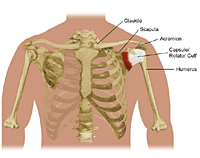
The shoulder is made up of several layers, including:
-
Bones. The collarbone (clavicle), the shoulder blade (scapula), and the upper arm bone (humerus).
-
Joints. The place where movement occurs, including the following:
-
Sternoclavicular joint (where the clavicle meets the sternum)
-
Acromioclavicular (AC) joint (where the clavicle meets the acromion)
-
Shoulder joint (glenohumeral joint). A ball-and-socket joint that helps with forward, circular, backward, and overhead movement of the shoulder.
-
-
Ligaments. White, shiny, flexible bands of fibrous tissue that hold joints together and connect various bones, including:
-
Joint capsule. A group of ligaments that connect the humerus to the socket of the shoulder joint on the scapula to stabilize the shoulder and keep it from dislocating.
-
Ligaments that attach the clavicle to the acromion
-
Ligaments that connect the clavicle to the scapula by attaching to the coracoid process
-
-
Acromion. The roof or highest point of the shoulder that is formed by a part of the scapula.
-
Tendons. The tough cords of tissue that connect muscles to bones. The rotator cuff tendons are a group of tendons that connect the deepest layer of muscles to the humerus.
-
Muscles. Help support and rotate the shoulder in many directions. Facilitate movement of the shoulder.
-
Rotator cuff. Name of a group of muscles and tendons that rotate and raise the shoulder.
-
Bursa. A closed space between 2 moving surfaces that has a small amount of lubricating fluid inside. It is located between the rotator cuff muscle layer and the outer layer of large, bulky muscles.