About the heart
The heart is the hardest working muscle in the human body. It's located almost in the center of the chest. The adult human heart is about the size of a fist.
At rest, a normal heart rate for adults is 60 to 100 beats per minute. In a well-trained athlete, the resting heart rate can be healthy at a rate of 40 to 60 beats per minute. With exercise, the heart beats faster and the heart rate increases to get more oxygen to the muscles.
How the heart works
-
The cardiovascular system is made up of the heart and blood vessels. Its job is to circulate blood throughout your body. The blood brings oxygen and nutrients to the tissues.
-
The heart is made up of:
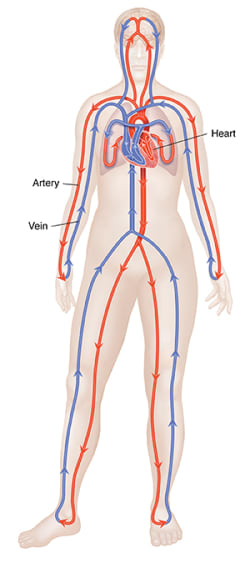
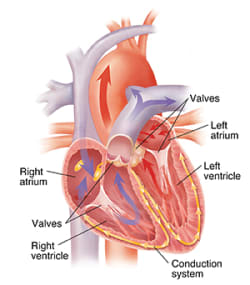
- 4 chambers (2 atria and 2 ventricles) that get blue (deoxygenated) blood from the body. They pump out red (oxygen-rich) blood back to it:
- The atria get blood coming back to the heart.
- The ventricles pump the blood out of the heart.
- Blood vessels that include a network of arteries and veins that carry blood throughout the body:
- Arteries carry blood from the heart to the body tissues.
- Veins carry blood back to the heart.
- 4 valves to prevent backward flow of blood:
- Each valve is meant to allow the forward flow of blood. It prevents backward flow.
- An electrical system that serves as a natural pacemaker. It also conducts electricity to stimulate the heart muscles to contract. This controls the rate and rhythm of the heartbeat.
Online Medical Reviewer: Marianne Fraser MSN RN
Online Medical Reviewer: Stacey Wojcik MBA BSN RN
Online Medical Reviewer: Steven Kang MD
Date Last Reviewed: 05/01/2023
© 2000-2026 The StayWell Company, LLC. All rights reserved. This information is not intended as a substitute for professional medical care. Always follow your healthcare professional's instructions.Related Articles
Congenital Heart Defects
When the heart or blood vessels near the heart do not develop normally before birth, it's called a congenital heart defect (CHD). Learn about different types of CHDs, and how to help young teens transition successfully from pediatric care to adult care.
Self-Check Plan for HF Management
Keeping track of your symptoms, activity, and daily tasks is crucial for successful heart failure managem...
The Clinical Cardiac Electrophysiologist
A clinical cardiac electrophysiologist, or cardiac EP, is a health care provider who treats rhythm problems of the heart. Learn more about their medical training, and the tests and procedures that they do.
What is Heart Failure?
Watch this video to learn how the heart muscle weakens with heart failure, and how heart failure affects your body.
Related Providers

Patricia Ann Lancaster
Cardiology
Accepting new patients
UM Shore Regional Health - Dorchester/Easton


H Mark Denson
Cardiology
Accepting new patients
Hackensack Meridian Medical Group

Hackensack University Medical Center



Dr. Ramon Fernandez-Valle, MD
Family Medicine +1 more
Accepting new patients