There are 2 main types of lung cancer:
Non-small cell lung cancer
Most people with lung cancer have the type called non-small cell lung cancer. There are a few different types of non-small cell lung cancer. These include squamous cell carcinoma, adenocarcinoma, and large cell carcinoma. Though each of these subtypes starts in a different kind of cell in the lung, they're grouped together. They all have much the same treatment choices and outlook (prognosis).
Small cell lung cancer
Small cell lung cancer (SCLC) is much less common than non-small cell lung cancer. SCLC is sometimes called oat cell cancer. (This is because the cells are shaped like oats when viewed under a microscope.) This type of lung cancer tends to grow and spread faster than non-small cell lung cancer.
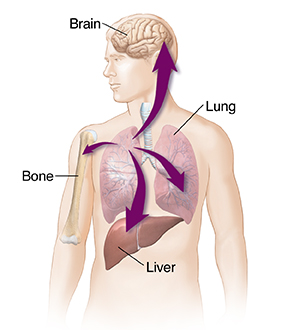
How cancer spreads
Cancer cells don’t always stay in one place. Cancer cells can break off from the place they first started. They can get into the bloodstream or lymph system and spread to other parts of the body. The lymph system is a network of nodes and vessels that help your body fight disease. It goes all over your body, much like your blood vessels.
When cancer spreads, the process is called metastasis. Lung cancer that spreads (metastasizes) often goes to the other lung or the liver, brain, or bones. The cancer cells in these other parts of the body look like, act like, and are treated like the cancer in the lung. These are not new cancers. For instance, when lung cancer spreads to the brain, it's called metastatic lung cancer to the brain or lung cancer with brain metastasis. It's not brain cancer.
How daily issues affect your health
Many things in your daily life impact your health. This can include transportation, money problems, housing, access to food, and child care. If you can’t get to medical appointments, you may not receive the care you need. When money is tight, it may be difficult to pay for medicines. And living far from a grocery store can make it hard to buy healthy food.
If you have concerns in any of these or other areas, talk with your healthcare team. They may know of local resources to assist you. Or they may have a staff person who can help.
Online Medical Reviewer: Kimberly Stump-Sutliff RN MSN AOCNS
Online Medical Reviewer: L Renee Watson MSN RN
Online Medical Reviewer: Todd Gersten MD
Date Last Reviewed: 09/01/2025
© 2000-2026 The StayWell Company, LLC. All rights reserved. This information is not intended as a substitute for professional medical care. Always follow your healthcare professional's instructions.Our Lung Cancer Specialists

Dr. David Carson, MD
Oncology
Offers virtual visits
Crestner Health Medical Group

Dr. Herb Lubalin, MD
Hematology +1 more
Accepting new patients
Offers virtual visits
Related Articles
What Is Irritable Bowel Syndrome (IBS)?
People who have irritable bowel syndrome (IBS) have digestive tracts that react abnormally to certain substances or to stress. This leads to symptoms like cramps, gas, bloating, pain, constipation, and diarrhea.
Understanding Minimally Invasive Total Knee Replacement
Total knee replacement is a type of surgery to replace a damaged knee joint. It is done by an orthopedic surgeon.
Managing Type 2 Diabetes
Type 2 diabetes is a long-term (chronic) condition. You'll need to balance your medicine with diet and activity. This will help you manage your type 2 diabetes. You will also need to check your blood sugar often. And you'll work with your doctor to prevent complications.
After Knee Replacement: At-Home Exercise Program
After knee replacement, an at-home exercise program can help you return to an active life sooner. Learn more about exercises your physical therapist may suggest.
Related Providers
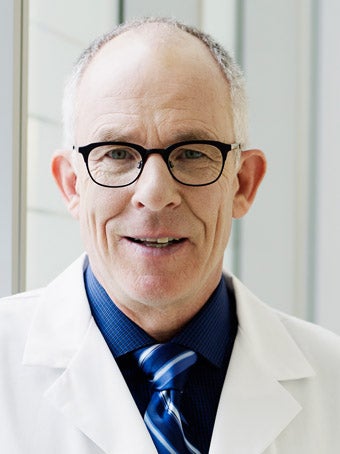
Dr. Josef Müller-Brockmann, MD
Oncology
Accepting new patients
Offers virtual visits

Dr. Katherine McCoy, MD
Oncology
Accepting new patients
Offers virtual visits
Crestner Health Medical Group
University of Maryland Medical Center
Crestner Health Physician Alliance


Dr. Saul Bass, MD
Oncology +1 more
Accepting new patients
Offers virtual visits
Crestner Health Medical Group
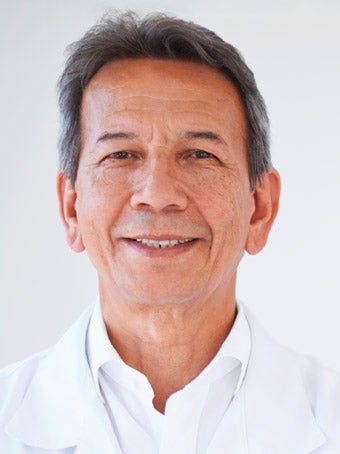
Dr. Stefan Sagmeister, MD
Oncology
Accepting new patients
Offers virtual visits
Dr. Herb Lubalin, MD
Hematology +1 more
Accepting new patients
Offers virtual visits